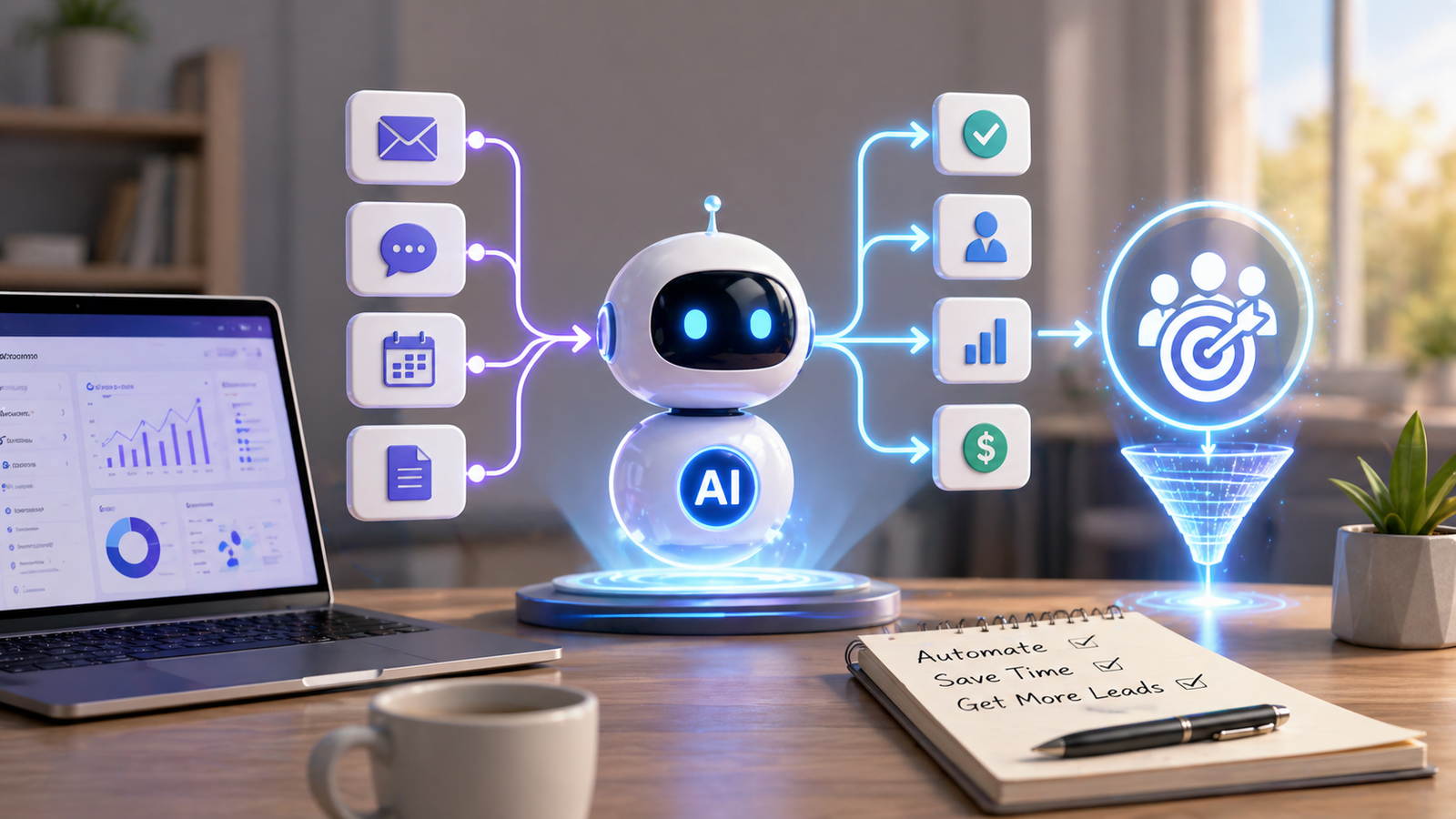
Quick Answer: What is AI Automation for Small Business?
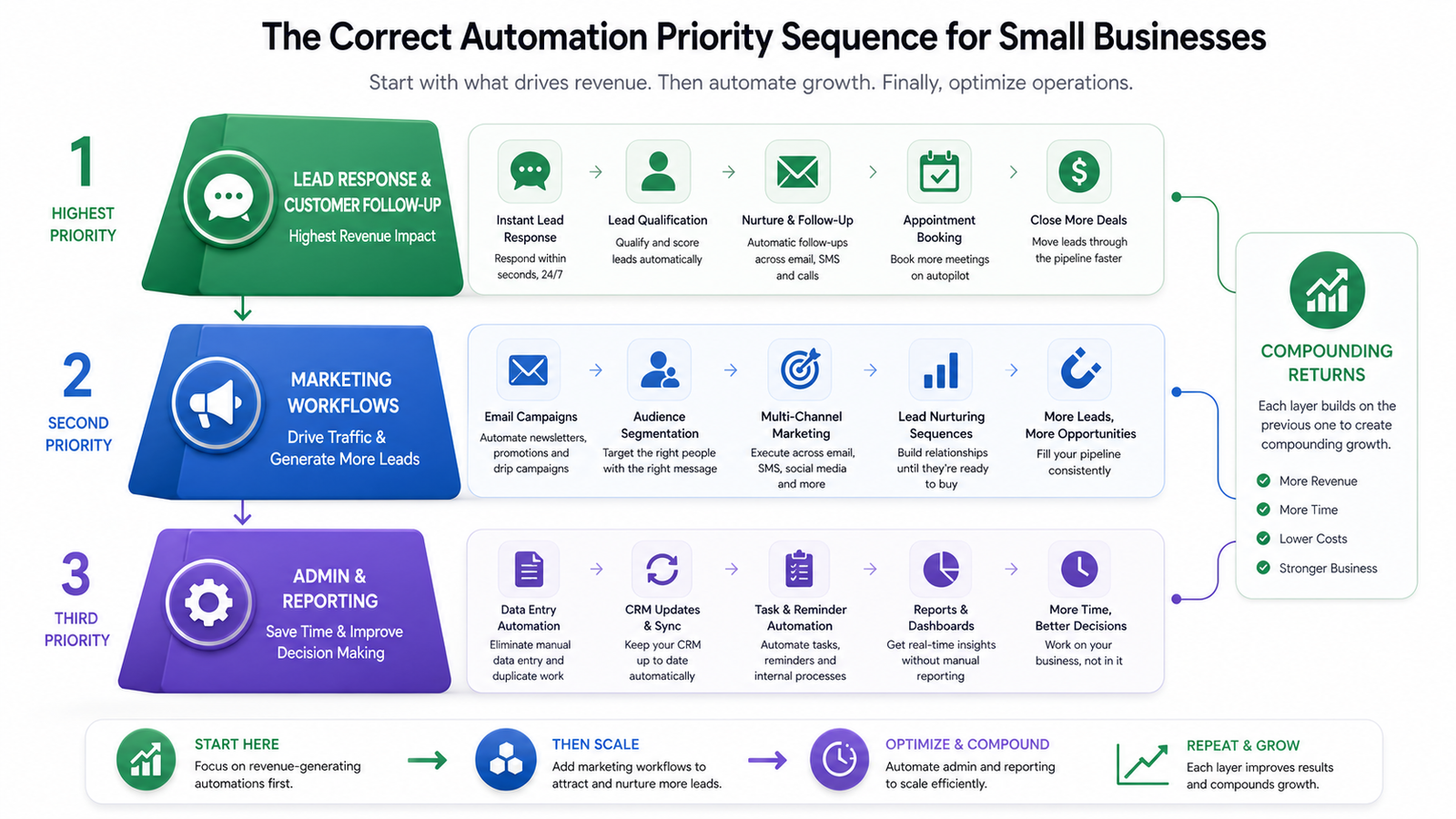
AI automation for small business means using artificial intelligence software to handle repetitive tasks automatically — without human involvement. This includes responding to customer enquiries, qualifying leads, sending follow up messages, booking appointments, updating your CRM, posting on social media and generating reports. In 2026, AI automation tools start from as little as $50 per month and can genuinely replace 20 to 35 hours of manual work per week. The businesses getting the highest return are those that automate lead response, customer follow-up and routine admin first — then expand from there.
What is AI Automation for Small Business
FoundationAI automation for small business refers to software systems that use artificial intelligence to carry out business tasks automatically, without requiring a human to perform them manually each time. Unlike basic automation (which simply moves data from one place to another), AI automation can understand context, make decisions, generate content, interpret customer intent and respond appropriately — behaviour that previously required human judgement.
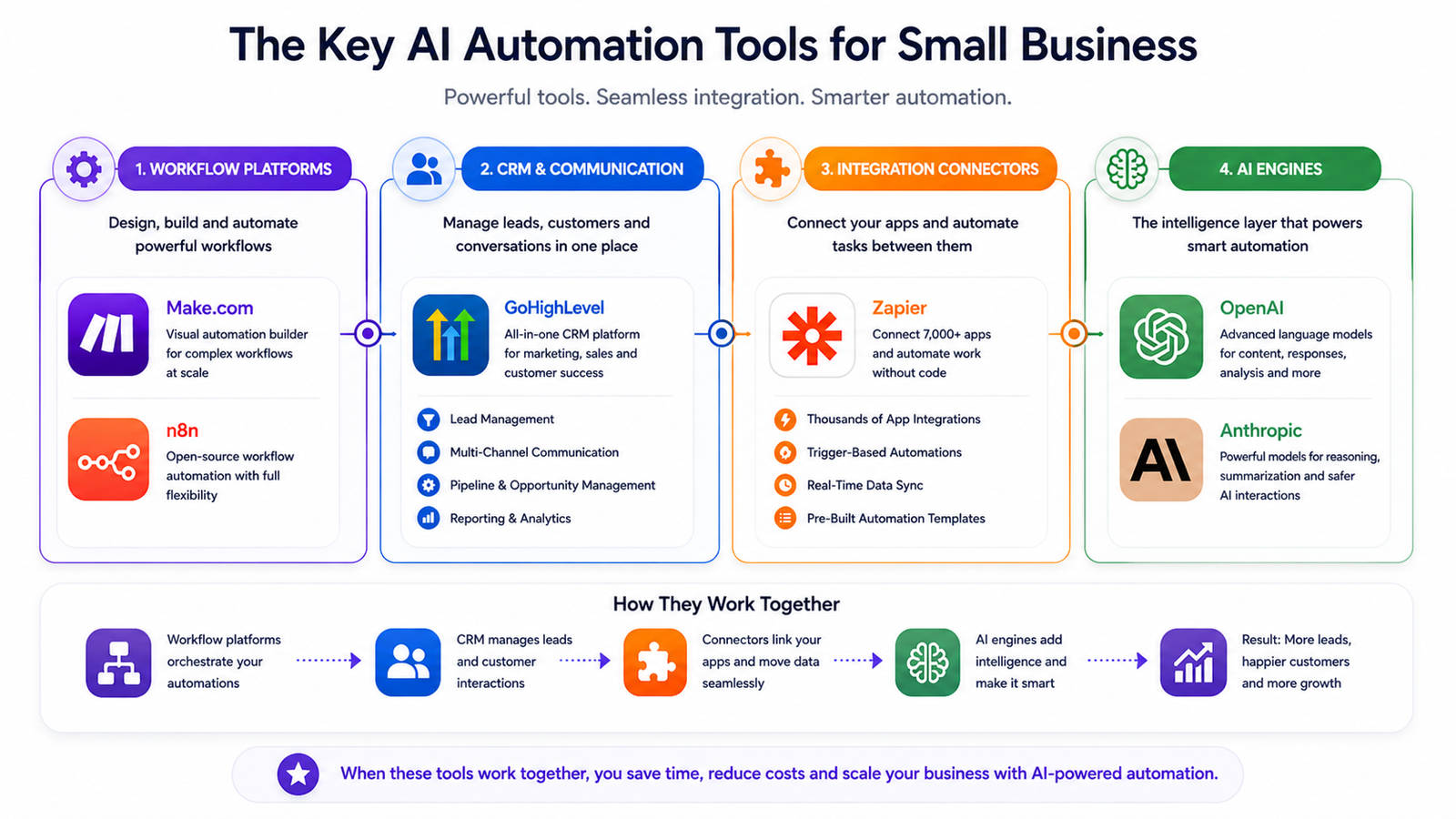
In 2026, AI automation is accessible to businesses of every size. What once required a development team and enterprise budget can now be built using no-code platforms like Make.com, n8n and GoHighLevel — configured by an agency or a technically capable business owner within days rather than months. The barrier to entry has collapsed. The question is no longer whether AI automation is feasible for small businesses. The question is which processes to automate first and how to sequence that investment for maximum return.
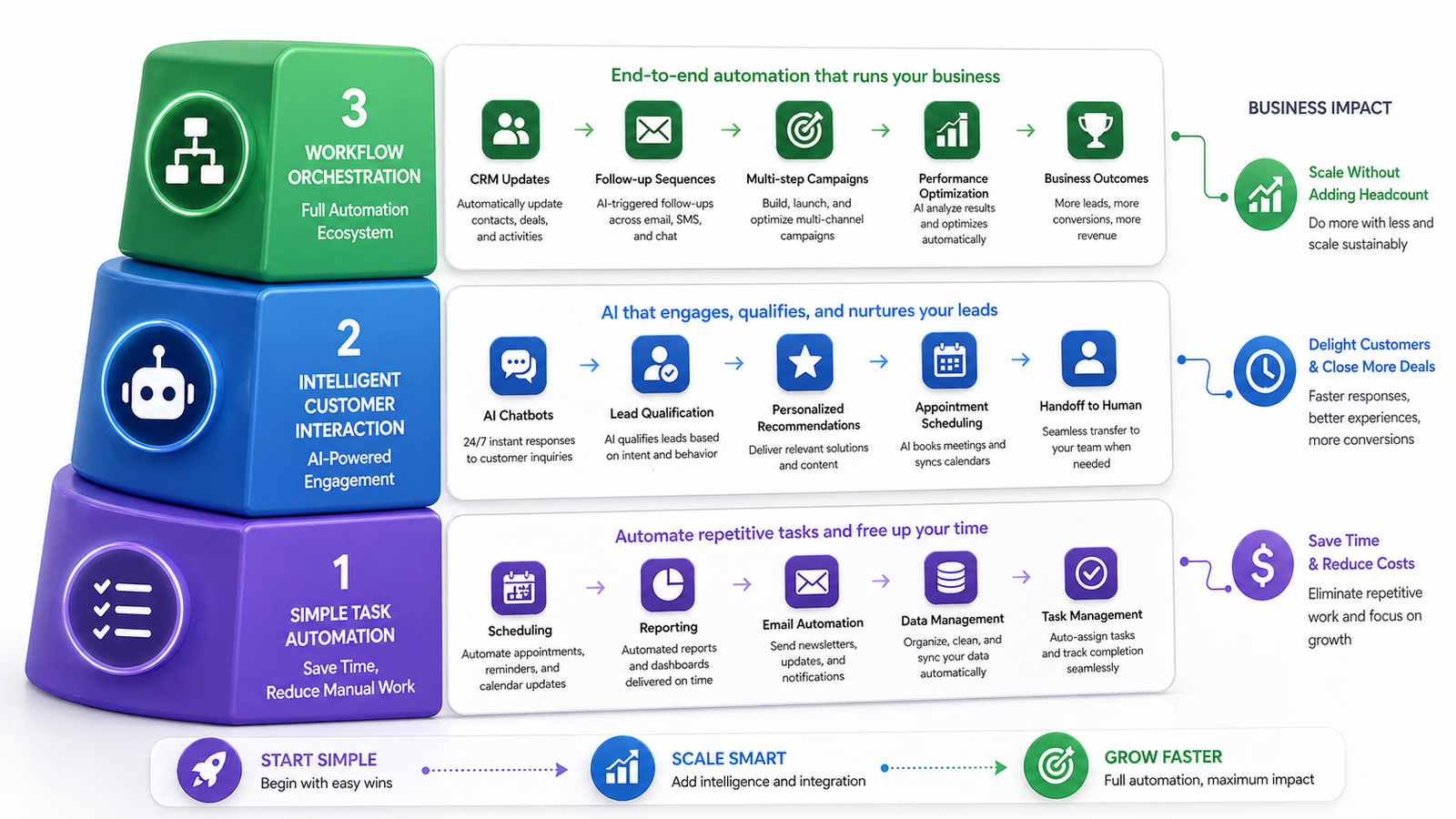
Basic Task Automation
Scheduled social media posts, automatic invoice generation, data entry between systems, appointment reminders and report generation. Rule based, predictable, repeatable. This is the entry level and where most small businesses start.
Intelligent AI Automation
AI chatbots that understand natural language, lead qualification that asks the right questions dynamically, content generation that follows your brand voice, and email responses that are contextually relevant to each customer. This is where AI adds genuine intelligence beyond rules.
Full Workflow Orchestration
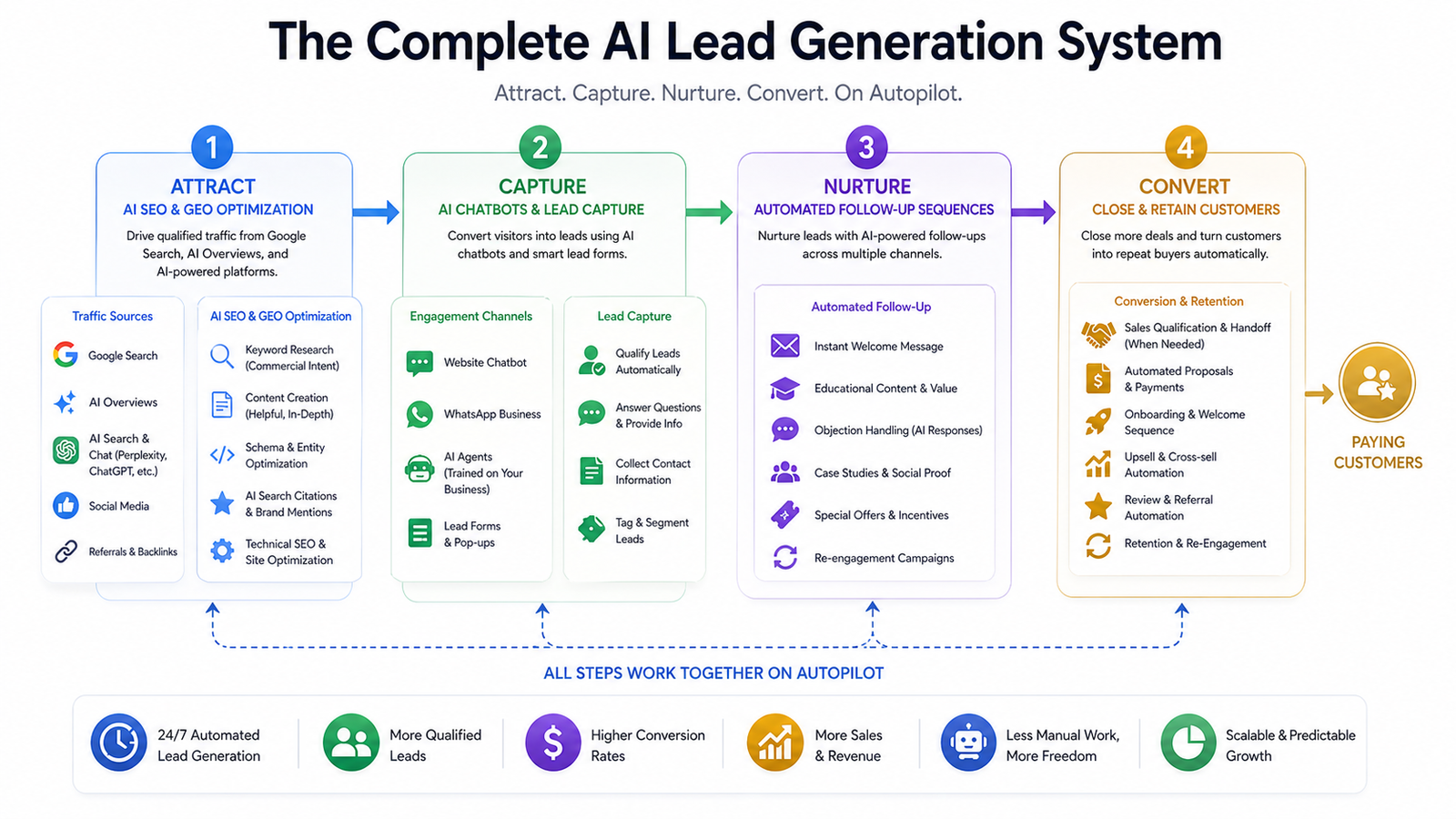
Multi-step automated workflows where a single trigger (a new lead enquiry) initiates a sequence of AI driven actions: qualifying the lead, updating the CRM, sending a personalised response, notifying the sales team and scheduling a follow-up — all without human involvement.
The 2026 reality: A small business with 3 to 10 employees that implements AI automation properly can operate with the efficiency of a team twice its size. The competitive advantage is not theoretical — it is already being realised by small businesses in every sector, from real estate agencies to export firms to clinics to coaching institutes. Businesses not automating in 2026 are paying a growing competitive tax in wasted time and missed opportunities.
Key Benefits of AI Automation for Small Business
Proven OutcomesThese are not theoretical benefits — they are outcomes documented across businesses that have implemented AI automation correctly. The specific numbers vary by industry and implementation quality, but the directional improvement is consistent.
20 to 35 Hours Saved Per Week
The average small business owner and their team spend 20 to 35 hours per week on tasks that AI can handle: responding to routine enquiries, sending follow-up messages, updating records, scheduling posts, generating standard reports and booking appointments. Automating these tasks does not just save time — it frees the owner to focus on strategy, client relationships and growth activities that actually require human expertise.
Lead Response in Under 90 Seconds
Research consistently shows that the probability of converting a lead drops by over 80 percent if you do not respond within 5 minutes. The average small business responds to leads in 4 to 8 hours. AI automation responds in under 90 seconds, around the clock. For businesses where speed of response determines conversion — real estate, education, legal, healthcare, finance — this single improvement frequently delivers full ROI on the automation investment within 30 to 60 days.
24/7 Customer Service Without Staff
AI automation enables a small business to provide customer service around the clock without hiring night shift staff or paying overtime. International businesses, in particular, benefit enormously — a UK customer enquiring at 11pm gets an immediate, helpful response even if the business team is in India or UAE and asleep. This 24/7 availability has a measurable impact on customer satisfaction scores and repeat business rates.
Fewer Errors and Consistent Quality
Human teams make data entry errors, forget to send follow-up emails and occasionally miss appointments. AI automation systems do not. Once configured correctly, they execute the same process with the same quality every single time. For businesses where consistency matters — legal documentation, financial reporting, client onboarding — the error reduction alone can be quantifiably valuable, reducing rework time and client complaints.
Scale Without Proportional Headcount
Traditional business growth requires proportional headcount growth — more customers means more staff means more overhead. AI automation breaks this equation. A business that handles 50 enquiries per day with AI automation can handle 200 enquiries per day with the same system and the same team size, simply by scaling the automation capacity. This scalability is particularly powerful for seasonal businesses where enquiry volume fluctuates significantly.
Better Data and Decision Making
AI automation systems generate structured, trackable data as a natural byproduct. Every lead interaction, every customer conversation, every appointment booking and every follow-up is logged automatically. This creates a data foundation that enables better business decisions — which marketing channels generate the best leads, which follow-up messages have the highest conversion rates, which times of day see the most enquiries, and which customer segments have the highest lifetime value.